
ASPIRANT’S CORNER
Psychology Tests in SSB Interview
The four psychology tests are:
Thematic Apperception Test (TAT)
Introduction
- You will be shown 11 pictures (black & white) and one blank slide.
- Each picture is displayed for 30 seconds, after which you get 4 minutes to write a story.
- The aim is to assess your imagination, positivity, problem-solving approach, and leadership qualities.
Key Tips
- Write positive, action-oriented stories.
- Show a hero/central character who solves problems rather than being a victim.
- Reflect qualities like responsibility, cooperation, determination, and initiative.
Sample TAT Stories
Theme: Determination, courage, helping others in adversity.
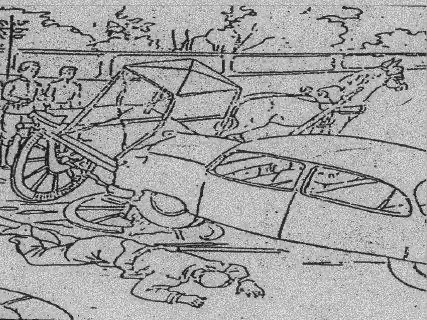
Story: Aman, a 22-year-old college student trained in first aid, was passing by when he saw a car accident involving a cycle-rickshaw and a horse cart. Without losing time, he immediately called the emergency helpline and requested an ambulance. Meanwhile, he checked the injured and ensured that they were breathing properly. He provided basic first aid, reassured the victims, and managed to calm the horse so that no further damage occurred. When the ambulance arrived, he helped the paramedics shift the injured. Later, Aman also reported the incident to the traffic police and gave his statement as a witness. His timely action saved lives and prevented chaos.
Word Association Test (WAT)
Introduction
- You will be shown 60 words, each for 15 seconds.
- You must write the first thought/sentence that comes to mind.
- Words are neutral; your response reflects your attitude and mindset.
Key Tips
- Keep responses short, positive, and action-oriented.
- Avoid negative or passive sentences.
- Try to reflect OLQs like responsibility, determination, helpfulness, and optimism.
Sample WAT Responses
- Duty → Duty makes a person dependable and disciplined.
- Fear → Fear disappears with constant preparation and practice.
- Success → Success comes to those who work consistently.
- Responsibility → Responsibility develops maturity and trust.
- Leader → A leader motivates his team through actions.
- Problem → Problems encourage creativity and solutions.
- Confidence → Confidence grows by facing challenges boldly.
- Courage → Courage builds hope in difficult times.
- Nation → Nation prospers when citizens work honestly
- Friendship → Friendship grows stronger with loyalty.
- Opportunity → Opportunity favours those who stay prepared.
- Discipline → Discipline shapes character and success.
- Discipline → Discipline shapes character and success.
- Time → Time rewards those who value it.
- Team → Teamwork converts effort into achievement.
- Knowledge → Knowledge uplifts individuals and society.
Lorem ipsum dolor sit amet, consectetur adipiscing elit. Ut elit tellus, luctus nec ullamcorper mattis, pulvinar dapibus leo.
Situation Reaction Test (SRT)
Introduction
- You will be given 60 real-life situations in a booklet.
- Time allotted: 30 minutes.
- You need to write short, practical, and positive reactions to each.
- The aim is to test your decision-making, initiative, and maturity.
Key Tips
- Responses should be quick, logical, and responsible.
- Avoid excuses—show problem-solving attitude.
- Reflect calmness, courage, and teamwork.
Sample SRT Responses
-
He saw a child drowning in the river…
He jumped in with nearby support and rescued the child safely. -
While going to college, he saw an accident on the road…
He helped the injured, called an ambulance, and informed the police. -
His team was losing a football match…
He motivated the team, improved coordination, and played with full spirit till the end. -
He found a wallet on the road…
He checked the ID and handed it over to the rightful owner/police. -
During an exam, his friend asked for help…
He stayed honest and focused on his own paper. -
His class was not listening to the teacher…
He calmed his classmates and requested them to maintain discipline. -
He missed his train while going to attend SSB…
He immediately arranged alternate transport and informed the SSB board. -
His cycle got punctured while going to school…
He repaired it quickly or walked to school without delay. -
His younger brother fell ill during exams…
He took care of him and helped revise lessons at home. -
He saw two groups fighting in the street…
He intervened calmly, separated them, and informed elders/police if required. -
While trekking, his friend slipped and got injured…
He provided first aid and arranged help to carry him safely. -
He was given a task beyond his capacity…
He planned systematically and sought guidance to complete it successfully. -
He saw smoke in a building…
He alerted people, called fire services, and helped in evacuation. -
He failed in an exam…
He analyzed mistakes, prepared better, and cleared it in the next attempt. -
He was made captain of a new team…
He built coordination, motivated members, and led the team effectively.
Self Description Test (SDT)
The Self-Description Statement (SDS) is the last psychology test at SSB. It gives candidates an opportunity to reflect on their personality and present a clear, balanced self-image. The test checks self-awareness, consistency, and sincerity—qualities crucial for future Armed Forces Officers.
You are required to write short paragraphs under five heads in 15 minutes:
- What your parents think of you?
- What your teachers think of you?
- What your friends think of you?
- What you think of yourself?
- What kind of person you want to become in life?
Detailed Sample SD
1. Parents’ Opinion
2. Teachers’ Opinion
3. Friends’ Opinion
My friends describe me as trustworthy, supportive, and approachable. They know they can rely on me during difficult times, and they appreciate my ability to motivate them positively. They see me as someone who balances fun with seriousness and keeps the group united. They also encourage me to be more assertive in expressing my own views in group discussions.
4. My Own Opinion
5. Future Aspiration
How to Write a Strong SD
- Be honest: Don’t exaggerate qualities—assessors cross-check SDS with your other tests.
- Balance strengths & weaknesses: Show awareness of areas to improve.
- Keep it officer-like: Highlight qualities like responsibility, leadership, determination, and integrity.
- Use simple, clear sentences: Avoid heavy or ornamental language.
Why Nimbus Defence Academy?
At Nimbus Defence Academy, Chandigarh, we provide the most structured and personalised guidance for SSB Psychology Tests
- Daily practice of TAT, WAT, SRT, and SDT under expert supervision.
- Individual evaluation by senior mentors like Brig. K.D. Singh (Retd.), ensuring authentic feedback.
- Mock test environments that simulate the actual SSB.
- Personal mentorship sessions to refine thought process and writing skills.
With proven results, expert mentors, and India’s best training environment, Nimbus Defence Academy has become the No.1 choice for SSB preparation.